We use affiliate links to earn commissions. Additionally, as an Amazon Associate, I earn from qualifying purchases at no extra cost to you. Learn more.

Filter by Category

Explore Posts

AI Hardware: GPUs, TPUs & the Chips Driving the Revolution

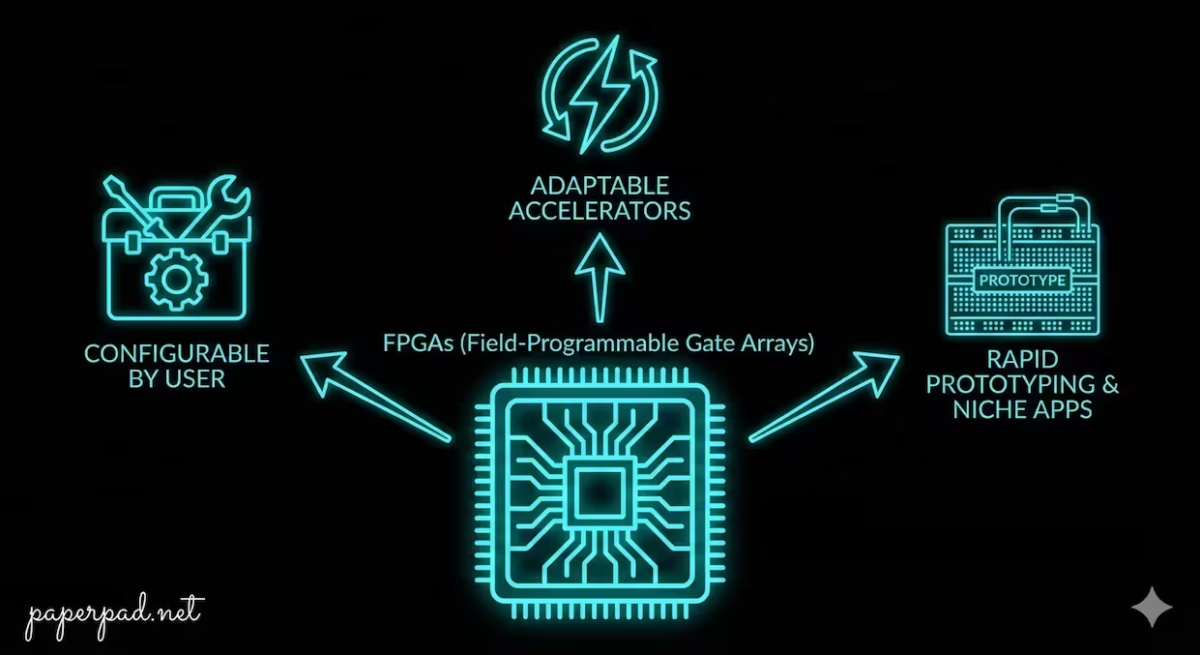
The AI Revolution is fueled by specialized hardware, moving beyond traditional CPUs. GPUs (Graphics Processing Units) are key, excelling at parallel processing for Deep Learning. TPUs (Tensor Processing Units) are custom-built by Google specifically for AI workloads. These chips provide the immense computational power needed for training complex AI models. Understanding these "powerful chips" is crucial for appreciating AI's capabilities and scalability.

The Role of Cloud Computing in AI’s Scalability and Power

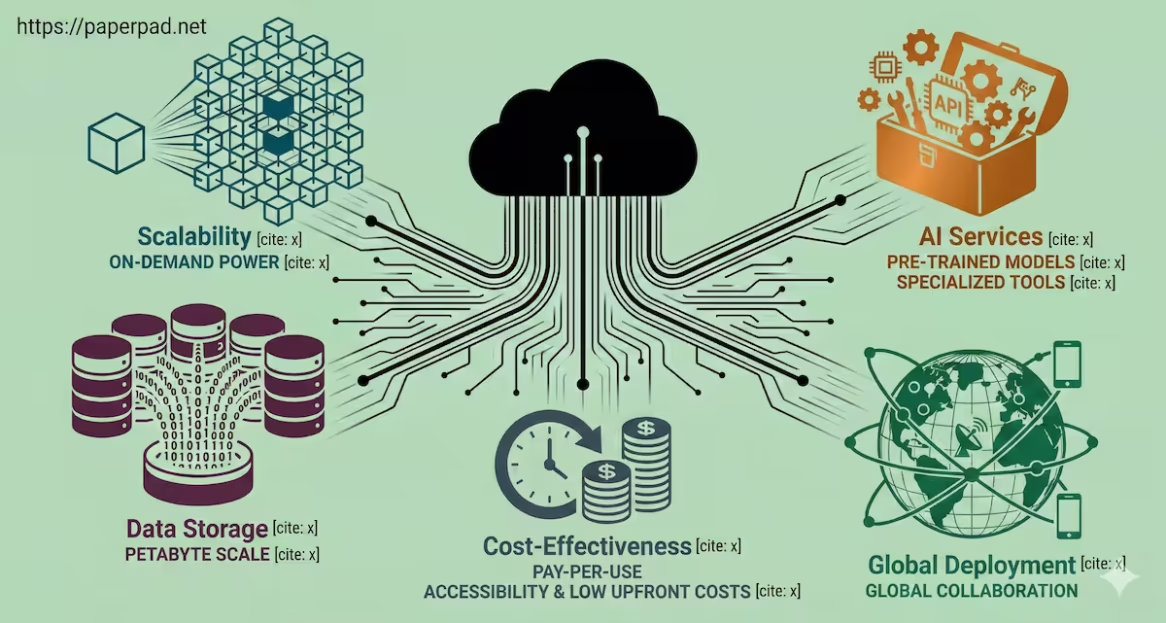
Cloud Computing provides the massive computational power and flexible infrastructure essential for modern AI. It's crucial for training complex Deep Learning models and managing vast data sets. Key benefits include unmatched scalability, reduced cost, accessibility, and powerful tools. Cloud AI enables rapid experimentation, global deployment, and continuous innovation. Understanding Cloud AI is vital for unlocking AI's full potential and driving its widespread adoption.

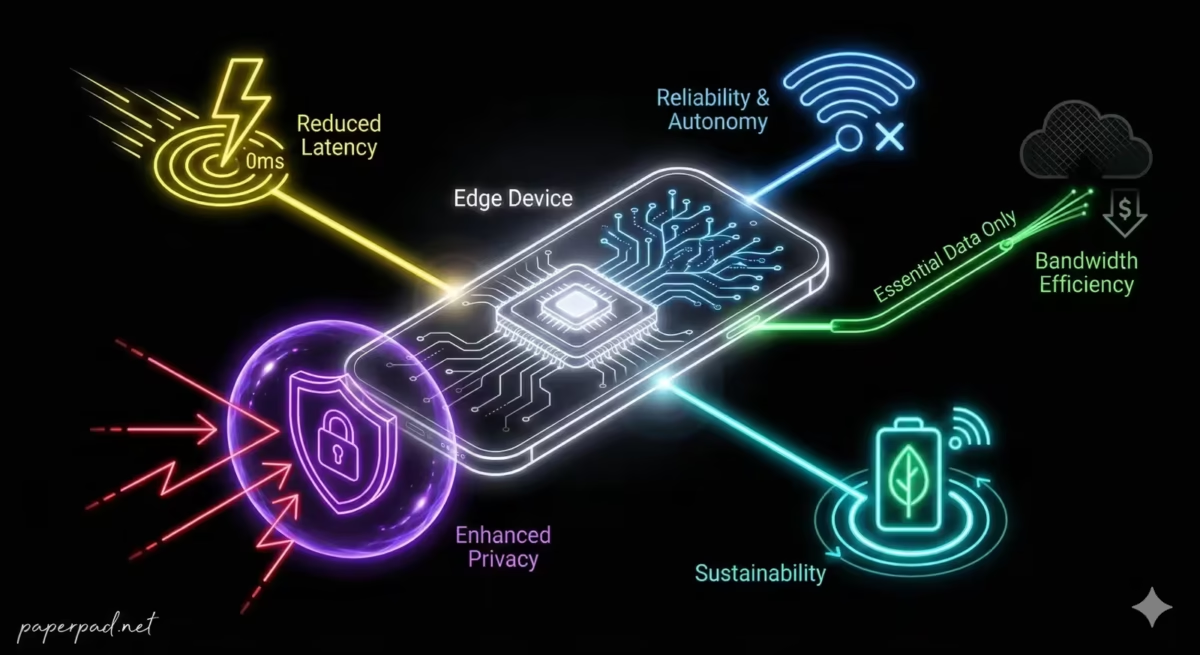
What is Edge AI: 5 Powerful Reasons AI Moves to the Source

Edge AI means running AI processing directly on local devices ("the edge") rather than in a central cloud server. It's crucial for speed, privacy, reliability, and efficiency in many real-world applications. Key benefits include reduced latency, lower cost, enhanced security, and improved autonomy. Edge AI is essential for devices with limited connectivity or strict data handling constraints. Understanding Edge AI is vital for designing intelligent systems that are responsive, secure, and sustainable.

Symbolic AI vs Connectionist AI: Two Paths to Machine Intelligence

Symbolic AI uses explicit rules and symbols to represent knowledge, like a detailed instruction manual. Connectionist AI (like neural networks) learns patterns from data, mimicking brain connections. Early AI focused on symbolic methods; modern AI is dominated by connectionist approaches, especially Deep Learning. Each path has distinct architectures, workflows, and strengths for different types of problems. Understanding these "two paths to machine intelligence" is crucial for appreciating AI's evolution and capabilities.

AI terminology Easy to understand

AI terminology can be intimidating, but understanding key terms demystifies the field. This glossary provides simple, clear explanations for common AI concepts. From Algorithms to Deep Learning, knowing the language helps you engage with AI meaningfully. Understanding these terms is crucial for informed AI adoption and effective human-AI collaboration. Don't let confusing terms be a constraint to your AI literacy – get AI Jargon Decoded!

Computer Vision: How AI Sees and Interprets the World

Computer Vision is the field of AI that enables computers to "see," interpret, and understand visual information from images and videos. It translates raw pixels into meaningful data, allowing AI to recognize objects, faces, and scenes. Deep Learning, especially convolutional neural networks, has revolutionized Computer Vision, enabling complex visual tasks. Applications range from self-driving cars to medical diagnosis and quality control in manufacturing. Understanding how Computer Vision works is crucial for developing AI that interacts intelligently with our visual world.

Boost Business Productivity with AI Solutions